Digital Retailing and EV Integration: What It Means for Automotive Distribution
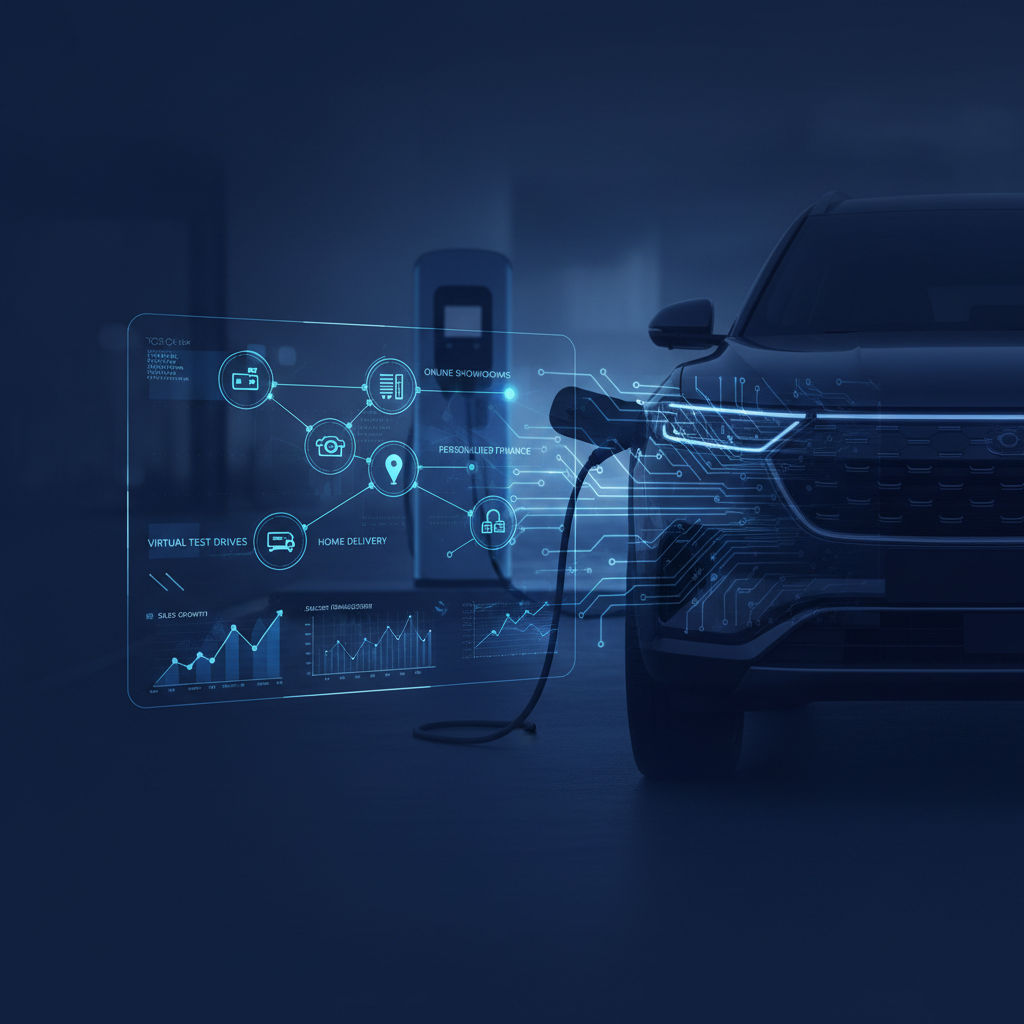
Omnichannel buying and the EV transition are reshaping distribution across AU/NZ/APAC. Here is what it means for distributors, dealer groups, OEMs, and developers, and why integration-first wins.
The automotive industry is moving decisively toward end-to-end digital retailing while absorbing the operational realities of the EV transition. The large US portfolio ecosystems, for example, have built omnichannel approaches to complete digital car buying across dealer sites and third-party marketplaces, spanning e-commerce, integrated financing, trade-in capture, and digital contracting to stitch the online-to-showroom journey together.
Industry research from the same market found that nearly half of franchise dealers now offer a fully online purchase path, with the strongest performers leaning on AI and external partnerships to lift profitability.
On the EV side, collaborations such as Volvo's work with Breathe Battery Technologies target faster charging and better battery performance, addressing the range and charging concerns that still slow adoption. (volvocars.com)
Implications for Automotive Distribution
For distributors and dealer groups across AU/NZ/APAC, the shift demands systems that handle multi-brand operations and keep stock and pricing synchronised in real time across every sales channel. EVs add their own wrinkle: on-road costs, government rebates, and charging considerations all need to surface accurately at the point of quote, which is exactly where an on-road costs and pricing engine becomes load-bearing.
OEMs feel the pressure from a different angle. They need data control and consistent brand presentation across a distribution network they do not directly operate, which makes integration that runs alongside dealer systems, rather than replacing them, the only workable path.
For developers, the requirement is robust, well-documented APIs and an extensible foundation, so configurators, inventory, finance, and CRM can be composed rather than rebuilt.
An Integration-First View
The durable answer is a coordination layer that sits across the network rather than a system that asks dealers to abandon their DMS. Vehicle configurators and digital retail tooling carry the online-to-showroom journey; integrated finance, CRM and lead management, and analytics give a single view of the customer and the operation; and an open developer platform provides the extensibility to integrate with the systems each market already runs. This is automotive commerce infrastructure, DMS-agnostic and integration-first, designed for multi-brand, multi-region reality.
Digital retailing and EV integration are not separate trends, they are the same shift toward a connected, transparent buying experience. Distributors, dealer groups, and OEMs that adopt an integration-first coordination layer will navigate it with their existing systems intact.
See how the pieces fit for distributors and dealer groups, or book a demo to walk through a multi-brand, EV-ready setup.